Cost Savings in Drying: A Holistic View Is Essential
10/1/24
To reduce energy costs and CO₂ emissions, it is generally advisable to replace outdated dryers with modern, energy efficient drying systems. The resulting shorter drying intervals and lower drying temperatures inherently lead to energy savings and quality improvements. At the same time, the drying process must always be considered as an integral part of the overall coating process. After all, the shortest drying cycle is of little use if it creates upstream or downstream congestion — or compromises coating quality.
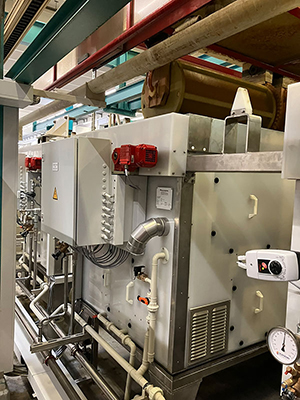
For optimal system throughput, the timing of all process steps must be precisely synchronized. For high coating quality, drying parameters must be flexibly adapted to the specific characteristics of each batch. The resulting benefits directly influence demand oriented energy consumption — savings that become immediately noticeable in daily operation, as demonstrated by the example of a galvanizing plant in Switzerland.
Challenge: Inhomogeneous Product Mix with Drying Intensive Parts
As is typical in contract galvanizing, the workpieces to be processed come with widely varying geometries. A particular challenge is small, densely packed bulk material coated in barrels with very small perforations. The workpieces lie tightly together, which previously required up to five drying cycles and elevated drying temperatures to achieve acceptable results. The focus of the new investment was therefore to achieve short drying cycles even for demanding pieces and to avoid bottlenecks at the dryer station.
New Dryer Trio Increases Plant Output
Based on many years of positive experience with the barrels and dryer systems from Richard Tscherwitschke GmbH, the company again opted for GALVADRY® dryers. The modern drying solution with integrated energy recovery enables a drying time of nine minutes for standard pieces. Average drying temperatures can be reduced by around 10 °C, and the hot rinse stage is no longer required — cold rinsing before drying is now sufficient.
By implementing a three dryer configuration, the system achieves not only the desired energy savings but also the flexibility required for consistent throughput. The third dryer acts as a buffer, allowing the system to handle special or peak loads. In practical terms: drying intensive workpieces take an extra round in the third dryer, while dryers one and two keep standard parts moving in line with the system takt. As a result of modernization and process optimization, drying cycles for the previously mentioned small bulk parts were reduced from five to a maximum of three.
Demand Driven Energy Supply, Energy Recovery, and Heat Loss Prevention
All three dryers are activated based on actual demand and system load. When not required, they enter standby mode and power consuming components are switched off. The third dryer, serving as a buffer, is only used for drying intensive parts.
All dryers share a compact, integrated energy recovery module. During the drying process, the system automatically switches to the use of residual heat to save energy. To minimize heat losses, the latest generation of GALVADRY® dryers features thermal bridge free insulation. In standby mode, sliding covers seal the dryer housing to retain the remaining residual heat within the system.
Flexible Adjustment of Drying Parameters
Energy can be saved simply by using it purposefully rather than wasting it. When designing the dryer hardware, knowledge of the barrel types used is essential. This allows the airflow system to be optimized for ideal air distribution through the load — improving the drying process itself and reducing energy consumption.
When, as in the case of this reference, barrels and dryers come from a single supplier, construction, process, and drying parameters can be perfectly aligned — even down to the level of individual part types. Each batch or article passing through the coating line is assigned its own drying parameters, such as drying time, drying temperature, barrel rotation, fan performance, and additional parameters for optimizing energy recovery. After workpiece identification at the beginning of the coating process, the system control automatically communicates the appropriate drying program to the dryers.
Maintenance as Part of the Overall System View
Regular maintenance has a positive impact on system availability and sustainable energy use. In the case of the described plant, upstream coating processes lead to contamination entering the dryers. If left unaddressed, this would reduce the efficiency of the drying system over time. Thanks to easily accessible maintenance openings, visual inspections can be carried out regularly to detect cleaning needs early. A built in rinsing system allows automatic or manual cleaning cycles.
Convincing Engineering
An investment in a new dryer must be planned with the entire process in mind. This includes detailed process planning with energy efficiency and savings calculations, taking into account operating costs and the required system output. Using proprietary simulation software, Richard Tscherwitschke GmbH provided an accurate energy consumption analysis already during the planning phase. System specific parameters, the product mix, and the Tscherwitschke barrel types used were all incorporated into the simulation.